Patient Advocates Take the Stage at the 4th International MCC Symposium
April 29, 2026
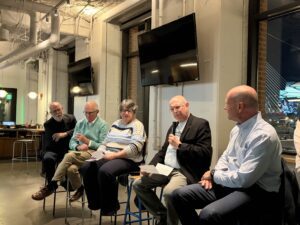
On April 26th, five Merkel cell carcinoma (MCC) patient advocates joined a panel at the 4th International MCC Symposium in Boston, MA, moderated by Paul Nghiem, MD, PhD, co-founder and Faculty Director of the Merkel Cell Carcinoma (MC3) Institute. They shared their experiences with an audience of key opinion leaders: researchers and clinicians focused on this rare and aggressive cancer, along with fellow patients and their loved ones.
Several powerful themes emerged from the panel and their participation in the rest of the symposium (Panelist responses have been refined for clarity and brevity):
- The critical need for bridge funding. The panel discussed how research and clinical trials for MCC cannot rely solely on industry and federal funding, especially given how rare this cancer is. Bridge funding plays a vital role in keeping research moving forward. Andy Dickson andhis employer’sfoundation, The Odyssey Group Foundation, have generously supported both the Nghiem Lab and the Merkel Cell Carcinoma Collaborative (MC3) Institute in this capacity for over a decade. Andy does this in honor of his late daughter, Kelsey Dickson, who passed away from MCC at the age of 10. This funding has enabled the FDA approval of two immunotherapy drugs, support of clinical trials, and many research projects.
- The transformative impact of MRD testing. Advocates emphasized that molecular residual disease (MRD) testing, particularly circulating tumor DNA (ctDNA) testing, has been transformative for their well-beingby helping to ease the anxiety that their MCC may return. Stewart Landers shared an unpublished letter he wrote to the Journal of Clinical Oncology in response to a publication on ctDNA testing for MCC. He underscored just how meaningful access to this testing has been for patients.
- Seeking specialized cancer centers with clinical trials. Sue Kelley emphasized the importance of being treated at a center with true expertise in MCC. She made the decision to switch hospitals so she could be cared for by MCC specialists who also offered clinical trials for this cancer. For Sue, that meant commuting from her home in New Hampshire to Dana-Farber in Boston to participate in a blinded clinical trial, a significant time commitment that shouldn’t be underestimated. She was fortunate to have strong support from her husband throughout the process but noted that not all patients have that kind of support system. This is an important factor to weigh when considering a trial at a distant center.
- Building two teams: personal and medical. Patients described the need for a strong personal support system. Specifically, someone who can navigate the complexities of insurance, so that care and surveillance aren’t delayed or avoided due to cost. They also described the importance of someone who can support their mental and spiritual well-being. On the medical side, they stressed that MCC moves fast and requires clinicians with direct experience treating it. Without that expertise, treatment can be dangerously delayed. Second opinions are always warranted in this setting.
- Leveraging community to advance awareness. Advocates shared how they have used their own networks and platforms to raise awareness of MCC. John Carroll, chief editor and co-founder of the leading biopharma publication Endpoints News, regularly shares his patient experience with his more than 110,000 combined social media followers and plans to write a book on the patient perspective. Stan Lapidus, an inventor and entrepreneur who serves on a number of diagnostics company boards, is exploring how his technology could help MCC patients.
These advocates remind us that progress in MCC depends on listening to patients. Their stories will continue to shape research, care, and access for the entire MCC community.